
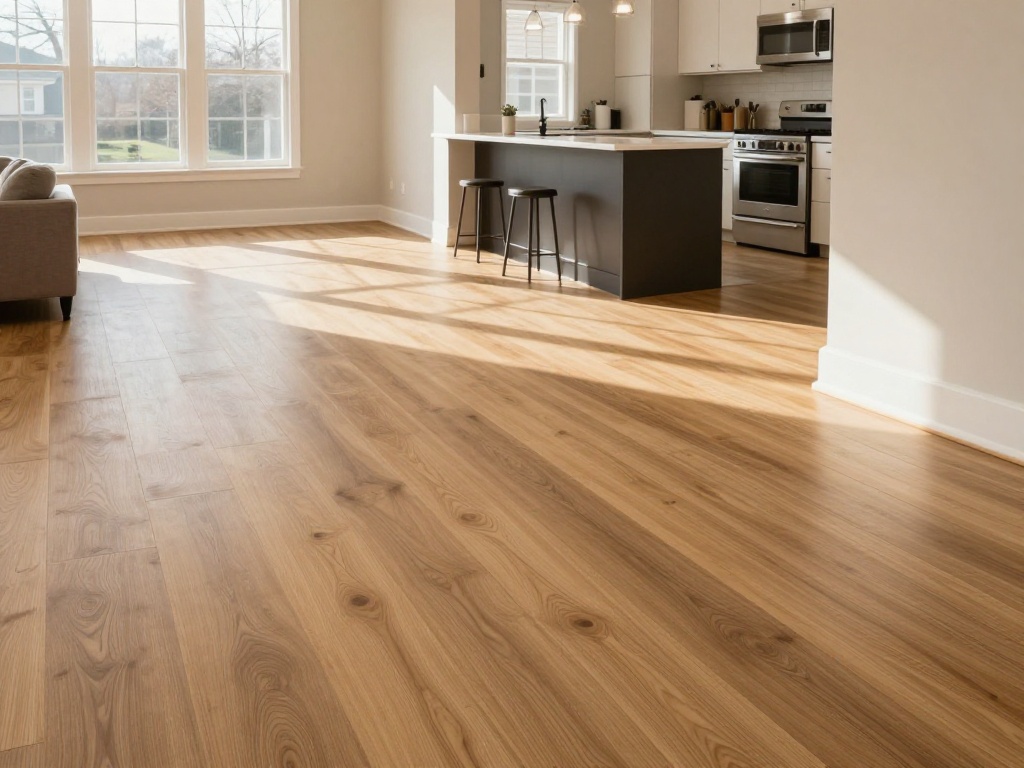
Get durable, beautiful floors with LVP in Ashburn, VA. Floor Bay shares what local homeowners should know before choosing luxury vinyl plank flooring.
Your carpet is stained beyond saving. The hardwood is scratched from years of dog nails and dragged furniture. The tile in the kitchen is cracked, and the grout has turned a color you don’t want to think about. You’ve heard about luxury vinyl plank, but you’re not sure if it’s just another trendy product that will look cheap in two years. If you’ve been searching for LVP in Ashburn, VA, you’re probably weighing whether this flooring can actually handle your family’s daily abuse. Floor Bay has installed LVP across Loudoun County homes, and the honest truth is this: the right LVP product, properly installed, outperforms hardwood in most real-world homes — but the wrong product or sloppy installation will look like a budget mistake within months.
What LVP Actually Is and Why Ashburn Homeowners Choose It
Luxury vinyl plank is a synthetic flooring material made from multiple layers: a rigid core (usually SPC or WPC), a printed design layer that mimics wood or stone, a wear layer that resists scratches and stains, and a backing layer for stability. In Ashburn, LVP has become the go-to replacement for hardwood and tile because it handles the specific challenges of Northern Virginia living.
The core options matter more than most buyers realize. SPC (stone plastic composite) cores are denser and more rigid, making them ideal for high-traffic areas and homes with heavy furniture. WPC (wood plastic composite) cores are slightly softer underfoot and better at absorbing sound, which matters in multi-level townhomes and condos common in Ashburn’s One Loudoun and Brambleton developments. The wear layer thickness is measured in mils — 12 mil is standard for residential, 20+ mil is commercial-grade and worth the upgrade for homes with pets or kids.
In Ashburn, we’ve noticed that most homeowners choose LVP based on looks alone. They fall in love with a wood-grain pattern and never ask about the wear layer thickness, the core type, or the locking system quality. The reality is that a beautiful plank with a thin wear layer and cheap click-lock edges will gap, chip, and look worn within a year in a busy household. Affordable LVP in Ashburn, VA should balance aesthetics with performance specs, not just price per square foot.
The Real Challenge in Ashburn
What locals actually face with LVP installation goes beyond picking a pretty floor. Ashburn’s housing market and climate create specific problems that generic flooring advice misses.
The local challenge that catches homeowners off guard: concrete subfloors in townhomes and newer construction. Much of Ashburn’s newer inventory — particularly in communities like Loudoun Valley and Ashburn Village — sits on concrete slabs or has concrete basement floors. Concrete is porous, and Northern Virginia’s seasonal humidity swings cause moisture vapor to migrate through the slab. LVP installed directly on concrete without proper moisture testing and an appropriate underlayment can warp, buckle, or grow mold underneath.
A client in Ashburn reached out when they noticed their newly installed LVP was cupping at the edges and separating at the seams. Their basement floor had looked dry, but moisture vapor was migrating through the concrete at levels well above manufacturer limits. The installer had skipped moisture testing to save time and had used a basic foam underlayment instead of a vapor barrier. They ended up pulling up the entire floor, applying a moisture mitigation system, and reinstalling — work that cost nearly double the original installation.
Here’s the objection competitors rarely answer honestly: Will my LVP floor feel hollow or sound cheap when I walk on it? Most Ashburn flooring contractors avoid this question because the answer depends entirely on installation quality. A floating LVP floor over an uneven subfloor feels bouncy and sounds hollow with every step. The fix is proper subfloor preparation — grinding high spots, filling low spots with self-leveling compound, and using a quality underlayment with sound-dampening properties. Professional LVP in Ashburn, VA should include subfloor prep in the quote, not treat it as an unexpected add-on after the floor is down.
How Floor Bay Approaches It Differently
Most flooring installers in Ashburn treat LVP as a quick, low-skill job — unbox the planks, click them together, collect payment. We don’t. Northern Virginia’s mix of concrete slabs, plywood subfloors, and older homes with uneven joists demands a more rigorous process. Our installation includes:
- Subfloor assessment before any material is ordered: We test concrete moisture levels with calcium chloride kits or in-situ probes, check plywood for deflection and squeaks, and identify high and low spots with a straightedge
- Product matching to conditions: We specify SPC cores for basements and high-traffic areas, WPC for upper-level bedrooms where comfort matters, and 20+ mil wear layers for homes with pets or active kids
- Proper acclimation: LVP needs 48–72 hours in the installation environment before laying to adjust to temperature and humidity. We never rush this step, even when clients are eager to finish
- Expansion gap management: Ashburn’s seasonal temperature swings cause flooring to expand and contract. We leave proper perimeter gaps and use transition strips at doorways to prevent buckling
Trusted LVP in Ashburn, VA should also account for the area’s active, family-oriented lifestyle. We see a lot of home gyms, playrooms, and multi-generational living setups in Loudoun County. These spaces need flooring that handles dropped weights, toy trucks, and wheelchair traffic without denting or scratching. We specify commercial-grade wear layers and dense SPC cores for these applications, not standard residential products that will fail under the load.
One insight generic articles never mention: Ashburn’s water quality is moderately hard, and that affects LVP maintenance in ways most homeowners don’t consider. Hard water leaves mineral deposits and film on floors that standard mopping won’t remove. Over time, this buildup dulls the finish and can etch the wear layer. We recommend specific pH-neutral cleaners and microfiber mop systems that protect the finish rather than stripping it. Installers who don’t mention this leave you with a floor that looks aged long before its time.
Practical Tips: What to Know Before You Decide
Before you commit to LVP in Ashburn, consider these points:
- Check your subfloor type and condition. Concrete slabs need moisture testing. Plywood subfloors need deflection testing — if they flex more than 1/360 of the span, the LVP will eventually crack at the locking joints. Ask your installer how they assess this.
- Understand the difference between glue-down and floating installation. Glue-down LVP is more stable and better for commercial spaces but harder to remove. Floating click-lock is easier to install and replace but needs perfect subfloor flatness. Your lifestyle and subfloor condition should drive this choice, not just cost.
- Ask about stair installation. Many Ashburn homes have stairs leading to finished basements or upper levels. LVP on stairs requires nosing, precise cuts, and proper adhesive. Not all installers handle stairs well, and sloppy stair work ruins the look of an otherwise perfect floor.
Working with clients in Ashburn, our team found that homeowners who order 10–15% extra material beyond the measured square footage save themselves from disaster. One local tip: Ashburn’s housing market moves fast, and if you need to match your LVP for a repair or addition two years later, the exact color may be discontinued. Keep a few extra planks stored in a closet for future repairs. Best LVP in Ashburn, VA isn’t just about the initial installation — it’s about having a plan for the long term.
CONCLUSION:
Choosing LVP for your Ashburn home means balancing looks, durability, and installation quality against the realities of Northern Virginia’s climate and housing stock. The right product, properly installed on a prepared subfloor, gives you years of worry-free performance. The wrong product or rushed installation leaves you with gaps, buckling, and regret. If you’re ready to replace your floors, start with a professional assessment that looks at your subfloor condition, moisture levels, and lifestyle needs before any planks get ordered. Floor Bay provides these evaluations for Ashburn homeowners who want flooring that looks great on day one and stays that way.
FAQs
How much does LVP installation cost in Ashburn?
Most LVP installations in Ashburn range from $4 to $8 per square foot including materials and labor. Budget products with thin wear layers sit at the lower end. Premium SPC planks with 20+ mil wear layers and professional installation reach the higher end. Stair installation, subfloor prep, and furniture moving add to the total. Always get a written, itemized estimate.
How long does LVP installation take?
A standard 1,000-square-foot residential installation takes 2 to 4 days depending on subfloor condition, room layout, and whether stairs are included. Complex layouts with many corners and transitions add time. Proper acclimation requires 48–72 hours before installation begins, so factor that into your timeline.
Can LVP be installed over existing tile or hardwood?
Sometimes. LVP can go over existing hard surfaces if they are level, stable, and properly prepared. Existing tile with deep grout lines needs skim-coating to prevent telegraphing. Hardwood must be sanded and checked for moisture content. Carpet must be removed entirely. Your installer should assess the existing floor before committing to an overlay installation.
How do I know an LVP installer is qualified?
Verify Virginia Class C contractor licensing, check for general liability insurance, and ask for local references from recent Ashburn or Loudoun County jobs. A qualified installer explains their subfloor prep process, shows you moisture test results, and provides a written warranty on labor. Avoid anyone who quotes over the phone without seeing your space.
Is LVP better than hardwood for Ashburn homes?
For most Ashburn families, yes. LVP resists scratches, moisture, and staining better than hardwood at a lower price point. It doesn’t dent from dropped objects or warp from humidity swings. Hardwood adds more resale value in luxury homes and can be refinished multiple times, but LVP wins on practicality for busy households with pets and kids.