
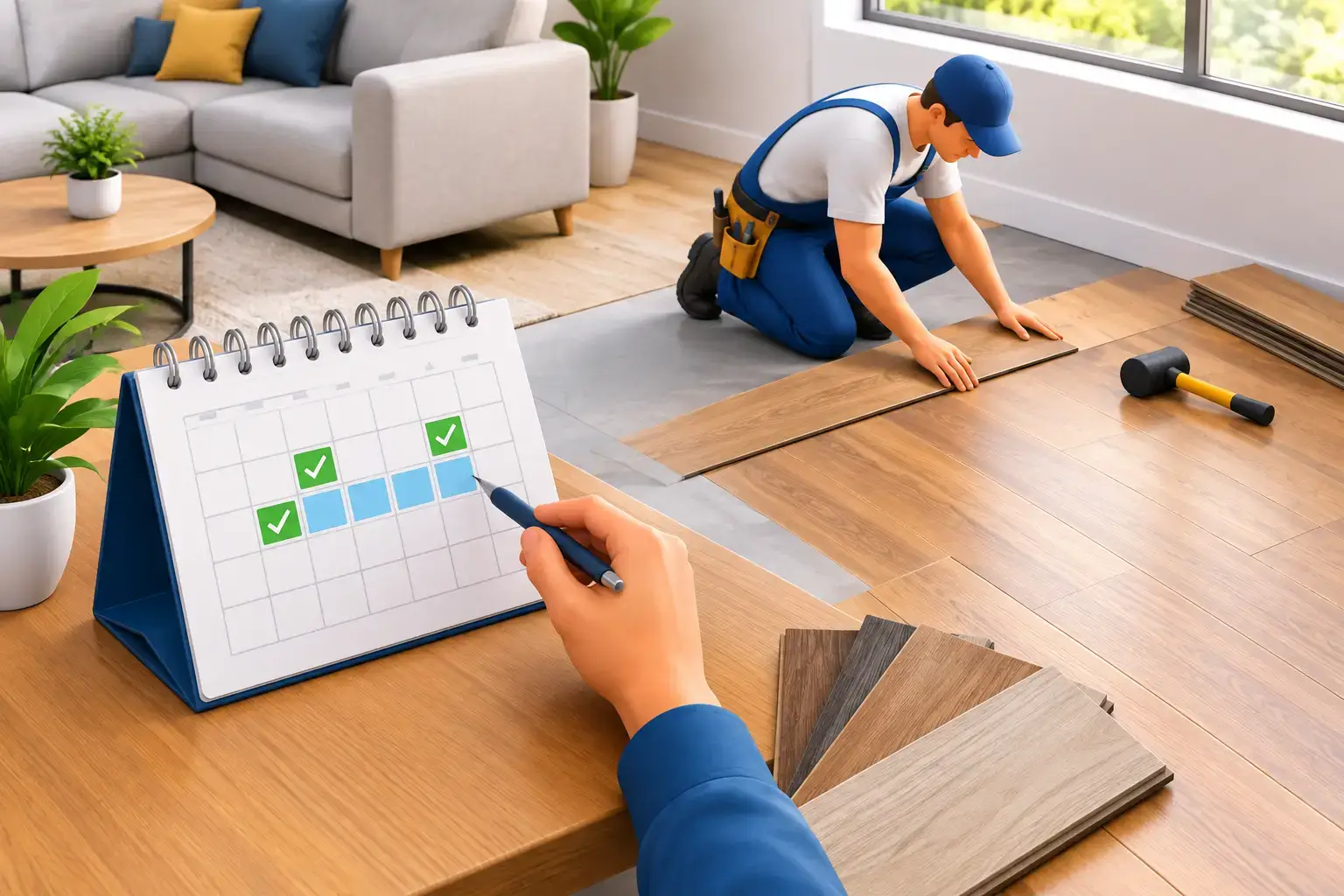
A new floor can change the feel of a room in a day, but the calendar behind that day deserves more attention than most homeowners expect. Knowing how to schedule flooring installation means planning for measurements, material lead times, subfloor preparation, furniture, and the realities of living in your home while work is underway. A little coordination upfront helps protect the finished result and keeps the project from becoming more disruptive than it needs to be.
Start With an In-Home Measurement and Clear Scope
The installation date should not be the first date on your calendar. Start with an in-home consultation and measurement so the project team can confirm square footage, room conditions, transitions, stairs, existing flooring removal, and any needed repairs. This is also the right time to discuss whether new baseboards, quarter round, reducers, or door adjustments are part of the project.
Accurate measurements reduce material shortages and last-minute changes. They also help establish a realistic installation timeline. A simple carpet replacement in one furnished bedroom may be completed quickly, while a whole-home hardwood or LVP project with tear-out, leveling, stair work, and detailed trim requires more planning.
For Northern Virginia homeowners, scheduling can also depend on condominium rules, elevator reservations, parking access, and required certificates of insurance. Raise those details during the estimate, not the week before installation.
Choose Materials Before You Choose the Installation Date
Your preferred product affects the schedule. Some flooring is available quickly, while a particular hardwood color, tile pattern, carpet style, or matching transition may need to be ordered. Ordering first and scheduling second is usually the safest approach, especially when your timeline involves a move, holiday gathering, sale listing, or remodeling project.
Ask your flooring professional to explain the anticipated material timeline and whether all components are included in the order. Flooring is only one part of a finished installation. Adhesives, underlayment, moisture barriers, stair noses, transitions, trim, and grout or tile setting materials may also be needed.
If you are choosing between products based on timing, consider the trade-off carefully. LVP may be a practical choice for a busy household because it is durable, water-resistant, and often moves through installation efficiently. Hardwood offers a classic look and long-term value, but the existing subfloor, acclimation needs, finishing details, and site conditions can add time. The best choice is the material that fits your home, budget, and expectations, not simply the product that appears fastest to install.
Build Acclimation and Prep Time Into the Plan
Many flooring products need time to adjust to indoor conditions before installation. This is especially common with hardwood and certain engineered wood products. The appropriate acclimation period varies by product, manufacturer requirements, moisture readings, and the temperature and humidity inside the home.
Do not assume materials can arrive the morning of installation and go straight onto the floor. Your contractor should advise on the right process for the selected product. Keep the home at normal living conditions during this period rather than turning off the HVAC to save energy. Consistent indoor conditions help the flooring perform as intended after installation.
Prep can also determine the date. Existing flooring removal may uncover uneven areas, old adhesive, moisture concerns, damaged subflooring, or squeaks that need attention. These conditions are common, particularly in older homes, and addressing them is part of protecting your investment. It may add time, but skipping proper preparation can lead to visible flaws, movement, or premature wear.
How to Schedule Flooring Installation Around Your Household
Pick an installation window that gives you flexibility. Avoid scheduling the day before movers arrive, relatives stay over, or a major event is happening at home. Even a well-run project can encounter a delivery delay or a subfloor issue that changes the sequence of work.
For a whole-home project, many homeowners find it easier to work in phases. Bedrooms may be completed first while living areas remain usable, or the team may install the main level while the family stays elsewhere for a short period. The right approach depends on the layout, the flooring type, and whether furniture can be moved between finished rooms.
Before confirming dates, decide how each of these practical details will be handled:
- Furniture moving, including heavy beds, electronics, and breakable items
- Removal and disposal of existing flooring
- Access to the home, parking, gates, and pets during work hours
- Work-from-home needs, including quiet space and internet equipment
- Temporary arrangements for kitchens, bathrooms, or bedrooms affected by the project
A professional installer can explain what the crew will handle and what should be completed before arrival. Clear expectations prevent a crew from losing valuable installation time waiting for rooms to be emptied or access issues to be resolved.
Coordinate Flooring With Other Remodeling Work
Flooring rarely exists in isolation. If you are updating a kitchen, bathroom, countertops, paint, or built-in cabinetry, determine the order of work early. In many projects, messy demolition, plumbing, electrical, drywall, and painting work should happen before the new floor is installed. That reduces the risk of scratches, paint spills, and unnecessary traffic over a finished surface.
The sequence can vary. Tile in a bathroom may need to be coordinated with vanity installation and door clearance. Hardwood refinishing creates a different schedule than installing prefinished hardwood because finishes need time to cure. A kitchen renovation may require decisions about whether flooring runs under cabinets or stops at cabinet lines. These are project-specific choices, and they affect both material quantities and timing.
One coordinated team can make this easier. Floorsbay helps homeowners connect product selection, design guidance, installation, transitions, and finishing details so the project has a clearer path from estimate to cleanup.
Confirm the Week Before Installation
A brief pre-installation check-in can prevent avoidable delays. Confirm that the materials have arrived, the installation address and access instructions are correct, and the rooms will be ready. If you have discovered a change in the project, such as new furniture delivery dates or an additional room you want included, mention it as soon as possible.
Remove small items, wall décor near work areas, fragile objects, and valuables before the crew arrives. Clear closets if they are included in the installation. Plan for pets to stay safely away from open doors, tools, adhesives, and active work zones. If you have concerns about dust, noise, or a particular area of the home, discuss them beforehand rather than trying to solve them during installation.
It is also wise to ask about expected daily hours, where installers will park, and whether you can walk on the floor immediately after completion. Some surfaces can handle light foot traffic sooner than others, while adhesives, grout, or protective finishes may require a waiting period.
Leave Room for the Final Details
The installation is not fully complete when the last plank, carpet seam, or tile is in place. Final details include transitions between rooms, trim, stair components, cleanup, and a walkthrough to review the work. These finishing touches matter because they create a clean visual connection between your new floor and the rest of the home.
During the walkthrough, look at the project in normal lighting and ask questions about care. You should understand how to clean the floor, what products to avoid, when rugs or furniture can return, and how to protect the surface from scratches or excess moisture. Keep extra material if possible. A few spare planks or tiles can be useful for future repairs.
The best installation date is one that gives the work the room it needs. Schedule with realistic lead time, prepare the home well, and leave a little space around the project for the unexpected. That approach turns flooring day from a stressful interruption into the start of a home that feels finished, functional, and ready to enjoy.