
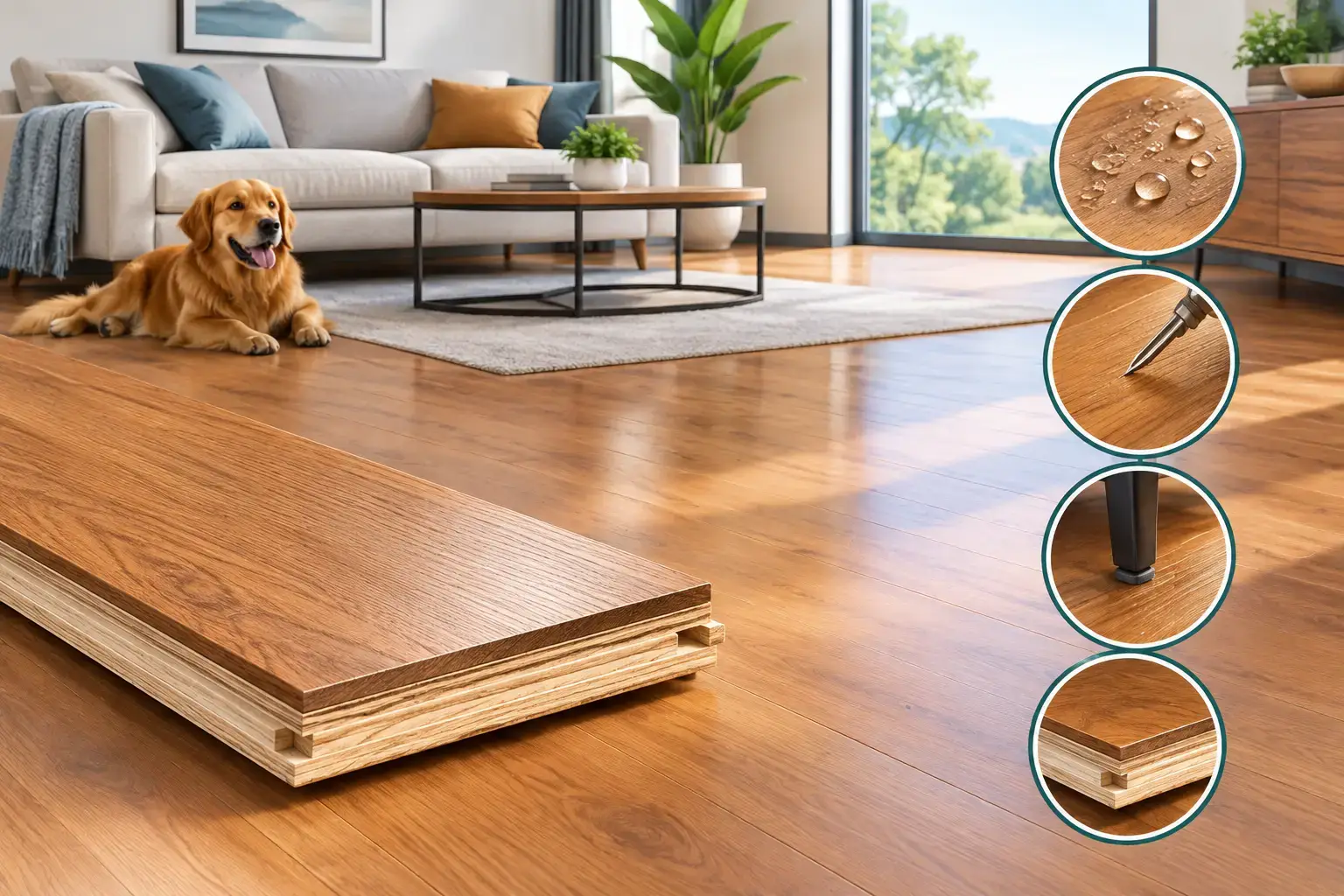
A floor can look excellent in a showroom and still be the wrong choice for a busy entry, a sun-filled family room, or a home with an active dog. This engineered hardwood durability review focuses on what homeowners actually need to know: how well these floors handle daily wear, what causes damage, and when engineered wood is a smarter investment than solid hardwood or LVP.
Engineered hardwood is a real-wood floor, not a wood-look product. Its top layer is hardwood veneer, while its core is made from layered wood or plywood. That construction gives it a more stable structure than a solid plank, particularly when humidity changes through Northern Virginia’s hot, humid summers and dry indoor heating season.
What Determines Engineered Hardwood Durability?
Not all engineered hardwood performs the same way. Two products can have a similar color and plank width but offer very different service lives. The veneer thickness, core construction, finish, installation method, and room conditions all matter.
The wear layer matters most
The wear layer is the visible hardwood surface on top of the plank. A thicker wear layer generally means better resistance to normal use and more potential for refinishing later. Entry-level engineered floors may have a thin veneer that is intended to be replaced rather than sanded. Higher-quality products often have a wear layer thick enough for one or more professional refinishing cycles.
For a low-traffic bedroom or a short-term update before a sale, a thinner wear layer can be reasonable. For a main level, open-concept living space, or long-term home, investing in a thicker top layer is usually the better value. It gives the floor more room to recover from surface wear over time.
Core construction affects stability
A quality multi-ply plywood core helps engineered hardwood resist movement caused by changes in temperature and humidity. This is one of its biggest advantages over solid hardwood. The cross-layered construction reduces expansion and contraction, helping the floor stay flatter and more consistent when conditions shift.
That does not mean engineered wood is waterproof. It can tolerate normal indoor humidity changes better than many solid wood floors, but standing water, wet shoes, plumbing leaks, and repeated spills can still damage the wood veneer or seep into joints. A stable core improves performance. It does not make wood impervious to moisture.
Finish quality protects against everyday wear
Factory-finished engineered hardwood typically has multiple protective coatings applied under controlled conditions. Matte and low-gloss finishes are especially practical because they hide fine scratches, dust, and small marks better than high-gloss floors.
A good finish helps with the marks caused by chair legs, pet claws, and regular foot traffic, but no real hardwood finish is scratch-proof. Harder species such as oak, hickory, and maple generally hold up better than softer species. Color and texture also affect how much wear you see. A wire-brushed oak with color variation can make ordinary life less noticeable than a smooth, dark, uniform floor.
Engineered Hardwood Durability Review: Daily Performance
For most well-maintained homes, quality engineered hardwood can remain attractive for decades. Its durability is best described as strong but conditional. It performs very well in living rooms, bedrooms, hallways, dining rooms, and many kitchens when the product is selected and installed correctly.
In active households, the floor will develop character. Small scratches and minor dents are normal with real wood, especially around doors, dining tables, and pet feeding areas. That is not necessarily a product failure. Homeowners who want a surface that never shows a scratch may be happier with a high-quality LVP or tile product. Homeowners who appreciate natural wood and accept some gradual patina often find engineered hardwood to be a satisfying long-term choice.
Engineered hardwood is also a practical option for condominiums and homes with concrete subfloors, where solid hardwood may be less suitable. Depending on the specific product and site conditions, it can be floated, glued down, or installed over an approved underlayment. The correct method matters because a floor that is well made can still fail early if moisture, subfloor flatness, and expansion space are ignored.
Where Engineered Hardwood Works Best
Engineered hardwood is an excellent fit for dry, climate-controlled areas where homeowners want the warmth and resale appeal of genuine wood. It works especially well in main living areas, upstairs spaces, formal rooms, and kitchens where spills are cleaned promptly.
Kitchens deserve an honest qualification. Engineered hardwood can work beautifully there, but it requires reasonable care. Use mats near the sink and exterior doors, wipe up spills quickly, and avoid leaving wet rugs or damp towels on the floor. If a kitchen sees frequent water exposure, large pets coming in from outside, or young children with lots of spills, waterproof flooring may offer more peace of mind.
Bathrooms, laundry rooms, and below-grade spaces with known moisture concerns are usually poor candidates for standard engineered hardwood. Some manufacturers offer water-resistant wood options, but product claims should always be matched to the actual room conditions. Water-resistant does not mean safe for repeated soaking or flooding.
Installation Has a Major Effect on Lifespan
Flooring durability starts before the first plank is installed. A professional installer checks the subfloor, tests moisture levels, confirms product compatibility, and addresses uneven areas that could cause movement, squeaks, or stress at the joints.
This preparation is particularly important in Northern Virginia, where homes may have a mix of older wood subfloors, concrete slabs, additions, basements, and rooms with uneven conditions. Moisture vapor from a slab can damage flooring from below if the wrong adhesive, moisture barrier, or product is used. A floor should also acclimate according to the manufacturer’s requirements before installation.
Details at the perimeter matter too. Proper expansion gaps allow the floor to respond to seasonal movement. Clean transitions, stair nosing, baseboards, and shoe molding protect edges and create a finished look. These details are easy to overlook during a quick estimate, but they affect both performance and appearance for years.
How to Keep Engineered Hardwood Looking Good
Routine care is straightforward, but it needs to be consistent. Sweep or vacuum with a hard-floor setting to remove grit, since small particles act like sandpaper under shoes. Use manufacturer-approved cleaning products and a lightly damp microfiber mop rather than a wet mop or steam cleaner.
Place protective pads under furniture legs and use walk-off mats at exterior doors. Avoid rubber-backed mats if the manufacturer warns against them, as they can trap moisture or discolor some finishes. Trim pet nails, lift furniture instead of dragging it, and clean up water promptly.
Sunlight is another factor to consider. Real wood can change color over time, especially in rooms with strong direct light. Window treatments, rugs that are moved occasionally, and UV-filtering glass can help keep the appearance more even. Some color change is natural and should be expected with any genuine wood floor.
Is Engineered Hardwood Worth the Cost?
For homeowners who want authentic wood, engineered hardwood often delivers a strong balance of beauty, stability, and long-term value. It can be less expensive than some solid hardwood options, though premium wide-plank engineered floors can cost just as much or more. The best decision depends on the product’s construction and how the space will be used, not the label alone.
A budget engineered floor may be appropriate for a rental, guest room, or modest refresh. A premium product with a thicker wear layer, stable core, and quality finish is better suited to a whole-home renovation or a high-traffic main floor. Compare samples in your own lighting, ask about the wear layer and warranty, and make sure the installation plan addresses your subfloor and moisture conditions.
A well-chosen engineered wood floor should support the way your household lives, not make you worry about every shoe, chair, or dropped glass. Floorsbay can bring samples to your home, explain the practical trade-offs, and help you select a floor that looks right in your space and is built for the years ahead.