
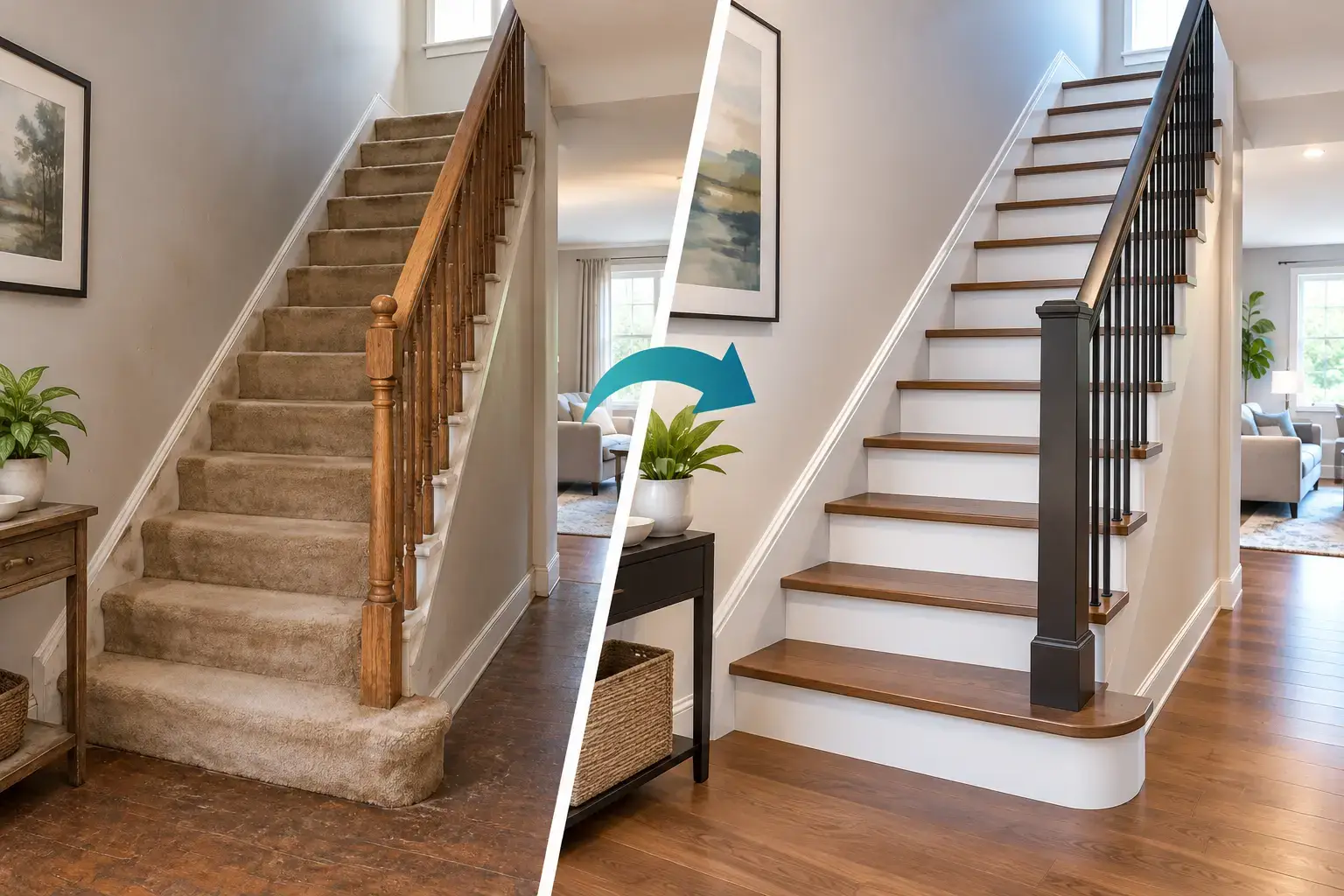
A staircase is often the first architectural feature people notice when they enter a home. If the carpet is worn, the treads creak, or the railing feels dated, it can make an otherwise updated entry and living area feel unfinished. A staircase remodel before after project shows just how much this one feature can change the look, safety, and value of a Northern Virginia home.
The biggest transformations do not always require rebuilding the entire staircase. In many homes, the underlying structure is sound. The change comes from replacing tired carpet, refinishing hardwood, updating railings, improving trim details, and choosing finishes that connect the stairs to nearby flooring. The right plan depends on what is underfoot, how the stairway is used, and whether the goal is a quick refresh or a broader renovation.
Staircase Remodel Before and After: Start With the Existing Stair
The “before” condition tells you where the budget and attention should go. A stairway covered in older carpet may have solid hardwood treads beneath it, but that is not guaranteed. Removing carpet can reveal usable oak, paint-grade lumber, patches, stains, nail holes, or inconsistent previous repairs. An experienced contractor should inspect what is there before promising a particular finished look.
Look closely at the treads, risers, stringers, newel posts, balusters, handrails, and the flooring where the staircase begins and ends. Loose railings, uneven tread depth, soft spots, and persistent squeaks should be addressed before cosmetic work begins. A beautiful stain color will not solve a railing that wobbles or a transition that creates a trip hazard.
This assessment also helps determine whether refinishing is the practical choice. Existing hardwood treads with enough material left for sanding can often be restored. If the wood is too thin, heavily damaged, or made from mixed materials, new tread caps or replacement treads may create a cleaner and more durable result.
What Creates the Biggest Before-and-After Change
For most homeowners, the visible transformation comes from creating contrast and continuity. Removing dated carpet and exposing or installing hardwood treads can make a foyer feel brighter and more intentional. Pairing stained treads with painted risers is a classic option, especially in traditional Colonial-style homes throughout Leesburg, Ashburn, and the surrounding area.
The stain does not need to match every nearby wood surface exactly. In fact, a forced match can look less natural when hardwood flooring, cabinets, and furniture all have different undertones. The better goal is coordination. A warm medium-brown tread may work beautifully with natural oak floors, while a deeper espresso stair can provide definition next to lighter LVP or engineered hardwood.
Railings have an equally strong visual effect. Repainting a wood railing, replacing bulky balusters, or combining a stained handrail with black metal balusters can update a staircase without changing its footprint. This is where proportion matters. A large open foyer may suit a bolder railing design, while a narrow enclosed stairway often benefits from a simpler profile that does not make the space feel crowded.
Fresh risers and crisp trim complete the work. Small details such as caulked joints, consistent skirt boards, neatly fitted transitions, and clean paint lines are what separate a partial upgrade from a finished remodel. These details are especially noticeable on open staircases that are visible from several rooms.
Choosing the Right Tread, Riser, and Railing Materials
Hardwood remains a popular stair material because it is durable, repairable, and visually connected to wood flooring. Oak is commonly used for treads because it handles daily traffic well and accepts a wide range of stain colors. Maple, hickory, and other species can work too, but their grain and stain behavior differ. A sample viewed in your home is more useful than a showroom sample viewed under different lighting.
Engineered hardwood can be an excellent floor choice, but stairs require special consideration. Not every engineered plank is designed to be cut and installed as a stair tread. Purpose-made stair nosings and coordinated components may be available, but they should be selected as part of the flooring plan rather than added at the last minute.
Luxury vinyl plank is practical for many rooms because it is water-resistant and easy to maintain. On stairs, however, the best approach depends on the product and manufacturer-approved trim system. A low-quality or poorly fitted vinyl stair installation can show seams, move underfoot, or create awkward nosing details. When the surrounding home has LVP, hardwood treads with a complementary color can be a durable alternative that still looks cohesive.
Carpet remains a smart choice for upstairs stairs, basement stairs, and homes where softness and sound reduction matter most. A patterned runner over finished wood treads can offer the best of both approaches: visual warmth, improved traction, and a more tailored appearance. Families with young children, older adults, or pets should weigh the comfort of carpet against the easier cleanup of hard-surface treads.
Safety Should Shape the Design
A staircase remodel is not only a style project. Stair components are functional parts of the home, and the installation must respect building requirements and everyday use. Handrail height, baluster spacing, landing transitions, and tread nosing all affect safety. Local code requirements can vary based on the scope of work and the home, so it is wise to address these details during planning instead of after materials arrive.
Slip resistance deserves attention as well. Glossy finishes can look dramatic in photos but may show scuffs and feel slick under socks. A satin finish is often more forgiving for active households. If you prefer painted treads, discuss a finish system designed for floors rather than standard wall paint. It needs to stand up to repeated foot traffic.
Lighting can make a meaningful difference, particularly on staircases with dark finishes or limited natural light. Updating a nearby fixture, adding wall lighting where appropriate, or selecting a lighter runner can make the stairway easier to use without changing its structure.
Plan the Remodel Around Connected Floors and Rooms
Staircases sit between spaces, which is why they are easy to overlook during a flooring project. A new floor can stop at the bottom step and leave an old staircase looking even more dated by comparison. Planning the stairs, entry flooring, upper hallway, and trim together usually produces a more polished before-and-after result.
This does not mean every surface must be replaced at once. A phased project can work well when budget or timing requires it. The key is selecting materials now that will still coordinate with the next phase. For example, choosing a neutral oak tread and simple painted riser can leave flexibility for a future upstairs carpet replacement or main-level hardwood update.
Condominium and townhome owners may have additional considerations. Shared-wall construction can make noise control more important, and association rules may affect work hours, material deliveries, or required approvals. A clear project plan helps avoid delays and protects neighboring residents from unnecessary disruption.
What to Expect During Installation
A well-managed stair remodel begins with measuring, material selection, and a clear scope of work. If hardwood will be refinished, the crew should discuss dust containment, stain testing, drying time, and when the stairs can safely be used. For a full tread-and-riser replacement, installers may need to sequence the work so the household maintains safe access between levels.
Prep work often takes longer than homeowners expect. Old carpet removal, tack-strip removal, adhesive cleanup, subfloor correction, squeak repair, and trim removal all influence the final quality. Skipping these steps may save time on day one but can lead to gaps, movement, or finish problems later.
The final walkthrough matters. Check that handrails feel secure, transitions are clean, tread edges are consistent, and paint or stain coverage looks even from both the bottom and top of the staircase. A professional installation should leave the area clean and ready for normal use according to the finish curing guidance.
Get a Result That Fits Your Home
The most successful staircase remodel before after projects balance appearance with daily life. A high-contrast black-and-white stair may suit a bright, contemporary home, while warm wood treads and a soft runner may better fit a traditional family space. There is no single best material or color, only the right combination for your floor plan, traffic level, maintenance preferences, and budget.
Floorsbay helps Northern Virginia homeowners coordinate flooring, stairs, trim, and finishing details through one organized process, from in-home material selection to professional installation and cleanup. Bring photos of staircases you like, but also be ready to discuss how your household uses the space. That conversation is what turns an attractive idea into a stairway that still looks and performs well years after the remodel.