
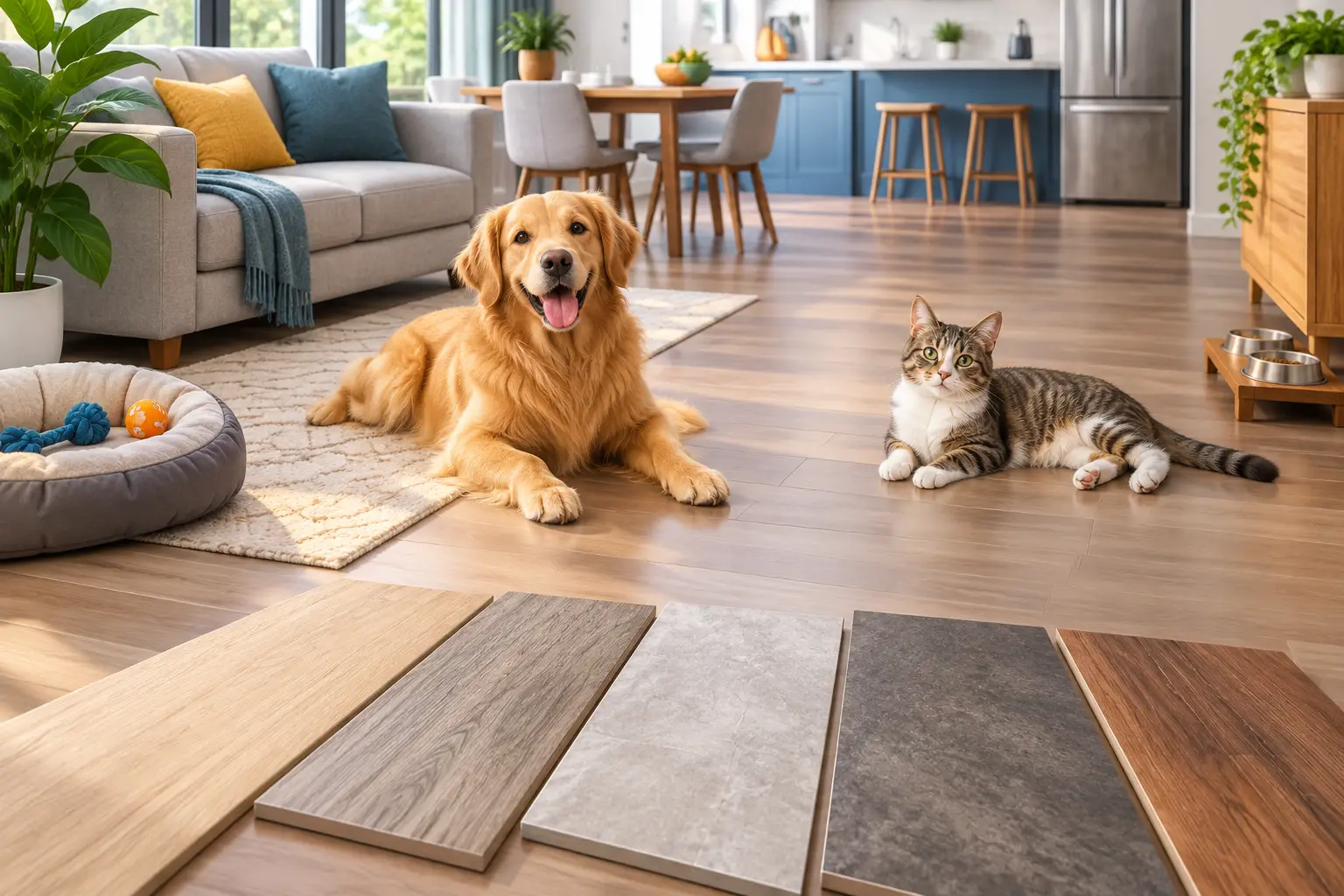
A muddy dog at the back door, a cat that occasionally misses the litter box, and nails clicking through the kitchen can expose the weak points in almost any floor. The best pet friendly flooring options are not simply the hardest materials on the shelf. They need to fit how your household actually lives, from quick spill cleanup and traction under paws to the look you want in adjoining rooms.
For Northern Virginia homeowners, the right choice often comes down to balancing water resistance, scratch visibility, comfort, and professional installation. A floor can have an excellent wear layer or moisture rating, but its long-term performance also depends on proper subfloor preparation, expansion space, transitions, and finishing at doors and stairs.
What Pets Really Put Your Floors Through
Pets create more than the occasional scratch. Water bowls can overflow, wet paws track in moisture and grit, and repeated running can wear the same pathways near doors, windows, and furniture. Accidents can stain or seep through flooring seams. Large dogs may also put more pressure on softer surfaces than a smaller pet would.
That is why a high-gloss, dark floor is often a demanding choice in an active pet household. It may be beautiful, but claw marks, dust, and shed fur tend to show quickly. Mid-tone colors, low-sheen finishes, and patterns with natural variation are usually more forgiving. They do not eliminate maintenance, but they make normal life less visible between cleanings.
Traction matters, too. A slick surface can be difficult for senior dogs or pets with joint issues. Textured finishes and appropriately sized area rugs can help, provided rugs are secured and do not trap moisture underneath.
Pet Friendly Flooring Options Worth Considering
Luxury Vinyl Plank and Luxury Vinyl Tile
Luxury vinyl plank, often called LVP, is one of the most practical choices for homes with pets. Quality LVP can offer strong scratch resistance, easy cleaning, a comfortable underfoot feel, and realistic wood visuals without the maintenance concerns of natural wood. Many products are waterproof, making them especially useful in kitchens, mudrooms, basements, and main living areas where pet traffic is constant.
Not every vinyl floor performs the same way. Look beyond color and plank width to the wear layer, core construction, locking system, and manufacturer guidance for scratch and moisture resistance. A thicker, commercial-grade wear layer can be a smart investment for large dogs or busy households. Textured matte finishes often conceal light scratching and paw prints better than smooth, glossy styles.
LVP is also a strong option when you want one consistent floor through several rooms. The right product and installation plan can create a clean transition from the entry to the kitchen and family room while handling everyday pet messes with less worry.
Porcelain and Ceramic Tile
Porcelain tile is exceptionally durable, water resistant, and easy to clean. It is a natural fit for bathrooms, laundry rooms, mudrooms, and kitchens, particularly when pets come in from rain, snow, or a muddy yard. Properly installed porcelain can handle heavy use for many years without showing the wear that affects softer materials.
The trade-off is comfort. Tile is harder and cooler underfoot than vinyl, carpet, or wood, and grout requires routine cleaning and sealing depending on the grout system selected. Choose a tile with a matte or textured surface rather than a polished finish if traction is a concern. Larger-format tile can reduce the number of grout lines, though the room layout and subfloor condition should guide the final size selection.
Laminate Flooring
Modern laminate has improved substantially in both appearance and durability. It can be a budget-conscious choice for pet owners who want a wood-look floor with good scratch resistance. Its tough wear surface can stand up well to nails and active traffic, especially in a lower-sheen, varied-grain design.
Water is the key consideration. Some laminate products are water resistant or waterproof for a stated period, but that does not mean every spill can be ignored. Moisture that reaches seams, edges, or an unprotected perimeter can cause swelling or damage. Laminate can work well in bedrooms, hallways, and living spaces, but households with frequent accidents or wet paws may prefer waterproof LVP in higher-risk areas.
Engineered Hardwood and Hardwood
Wood flooring brings warmth, character, and lasting value to a home, and pet ownership does not automatically rule it out. However, it is important to choose wood with realistic expectations. Pet nails can scratch wood finishes, water can leave marks, and accidents need prompt cleanup.
For a more forgiving result, consider engineered hardwood with a durable factory finish, a wire-brushed or textured surface, and a medium-tone stain that does not highlight every mark. White oak is frequently selected because its grain and finish options work well with many home styles. A matte finish and a little natural variation will generally hide daily wear better than a dark, glossy, smooth floor.
Solid hardwood can also be a good long-term choice because it may be refinished in the future, depending on the floor’s thickness and condition. Still, it is best for households that can stay on top of wiping spills, trimming nails, and using mats near exterior doors and water bowls. Wood asks more of the homeowner, but for many families, its appearance is worth that care.
Carpet in the Right Rooms
Carpet remains a practical option for bedrooms, stairs, and spaces where comfort and sound control matter most. For pet households, choose a stain-resistant carpet with a low to medium pile and a color or flecked pattern that will not reveal every strand of fur. Solution-dyed fibers and quality stain protection can improve cleanup after everyday messes.
Carpet is not ideal for every pet situation. Repeated accidents can reach the pad and subfloor, creating lingering odor and making replacement more likely. If you have a puppy, a senior pet, or a pet with recurring accidents, reserve carpet for lower-risk rooms and use waterproof hard-surface flooring in primary living areas.
How to Choose Pet Friendly Flooring Options for Your Home
Start by looking at the rooms your pet uses most, not just the floor sample. A waterproof LVP may be the right foundation for an open kitchen and family room, while carpet keeps upstairs bedrooms comfortable and quiet. Tile may make the most sense at the entry, near the mudroom, or in a bathroom where water exposure is routine.
Next, consider your pet’s size, age, and habits. A small indoor cat creates different demands than two large dogs that run through the house after every walk. If your pet slips on smooth surfaces, prioritize a finish with texture and consider where runners or washable rugs can safely add traction. If shedding is the bigger challenge, a medium-tone hard surface may make daily cleaning easier.
It also helps to think about the next five to ten years. Will you be replacing floors before selling, renovating a kitchen, finishing a basement, or making a home more accessible for an aging pet? Choosing coordinating surfaces now can make future updates look intentional rather than pieced together.
Installation Details Matter as Much as the Material
Even a pet-friendly product can fail early when moisture protection and installation details are overlooked. Subfloor leveling is especially important for floating floors such as LVP and laminate. An uneven subfloor can create movement, gaps, noisy spots, or stress on the locking system.
At exterior doors, patios, laundry areas, and transitions between rooms, careful finishing helps protect the floor from water and daily traffic. The right transition pieces, baseboards, shoe molding, and expansion gaps are not minor details. They allow the floor to perform as designed while giving the finished space a clean appearance.
Professional product guidance is valuable because samples can look different under your home’s lighting and next to your cabinets, paint, and furnishings. Floorsbay can bring flooring selections to your home, helping you compare color, texture, and performance where your pet and family actually live.
A good floor should let you enjoy your home without treating every paw print like an emergency. Choose a surface that fits your routines, clean up moisture promptly, and prioritize a finish that looks better with real life on it – not only in a showroom.