
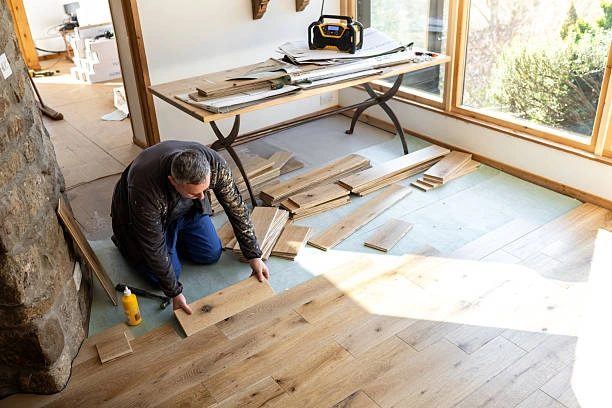
Choosing reliable wood flooring services in Leesburg, VA? Learn hardwood types, installation steps, cost factors, and how to pick the right flooring contractor for your home.
Leesburg homeowners have strong reasons to choose wood flooring. The historic character of properties near downtown Leesburg, the colonial-style homes in Lansdowne, and the newer builds across Ashburn Road corridors all benefit from hardwood in different ways — whether that means restoring original planks, matching existing floors in an addition, or installing fresh wood in a newly finished basement. What separates a great result from a frustrating one is almost always the contractor and the process, not just the material. FLOORSbay Inc works with homeowners across Leesburg and the broader Loudoun County area, handling hardwood floor installations, refinishing projects, and engineered wood upgrades from first consultation through final coat. Getting the right outcome starts with knowing what questions to ask and what to look for before any work begins. Reliable Wood flooring services in Leesburg, VA means more than picking a wood species — it means understanding the full scope of what your home actually needs.
Why Leesburg Homeowners Choose Wood Flooring Over Other Options
A quick stroll through almost any listing for resale in Leesburg and you will see something consistent. Homes with hardwood floors photograph better. They sell faster and are seeing stronger offers than comparable units with carpet or vinyl throughout.
According to the National Association of Realtors (2022), 54% of homebuyers believe they would pay more for a residence having hardwood flooring, while agents believe that wood floors help homes sell quicker in competitive situations. Consistently one of Virginia’s busiest real estate environments, Loudoun County makes this finding directly relevant to flooring upgrade- weighing homeowners in Leesburg.
When properly installed, wood flooring does well in Northern Virginia’s climate beyond resale value. Leesburg has a mixed-humid climate. During winters, the humidity levels drop to dangerous levels resulting in dry indoor air while during summers the humidity levels are expanded to a level the wood fibres expand. The seasonal movement is the result of using the correct species, board width, and finish. A flooring contractor that is aware of near local climate conditions, specifies materials and installation techniques that will allow for this expansion and contraction without cupping, gapping or warping.
The best hardwood flooring services in Leesburg, VA coordinate species selection, subfloor preparation, acclimation, and finish in one seamless process – not as multiple isolated decisions for you to make.
Wood Flooring Types That Work Well in Leesburg Homes
Choosing between flooring types comes down to four factors: your subfloor type, the room’s moisture exposure, your design goals, and how much traffic the floor will handle. Each option has real tradeoffs worth understanding before you commit.
Solid hardwood is milled from a single piece of wood. Oak, maple, hickory, and walnut are the most common species in Leesburg homes. Solid hardwood can be sanded and refinished multiple times over decades, making it a long-term investment. The tradeoff is moisture sensitivity — solid hardwood should not go below grade or over radiant heat systems without specific engineering.
Engineered hardwood uses a real wood veneer bonded over multiple cross-ply layers. This construction resists seasonal movement far better than solid wood. Engineered boards work well over concrete subfloors, in basements with controlled humidity, and in rooms where a solid plank would move excessively. Quality matters here — engineered boards with a thicker wear layer (3mm or more) support two to three refinishing cycles before replacement.
Reclaimed wood flooring appeals strongly to homeowners in Leesburg’s historic districts. Reclaimed oak, pine, and chestnut carry knots, saw marks, and patina that new wood cannot replicate. Lead times and material sourcing require more planning, and professional installation is non-negotiable given the dimensional variation in reclaimed stock.
Prefinished hardwood arrives from the factory with stain and protective finish already applied. Installation is faster and the home returns to normal use the same day. Site-finished hardwood — sanded, stained, and coated on-site — offers more color and sheen customization but requires three to five days of curing time before normal traffic resumes.
Wood Flooring Options Comparison
| Flooring Type | Best Subfloor | Moisture Tolerance | Refinish Cycles | Best For |
| Solid Hardwood | Wood subfloor above grade | Low | 5–7 times | Living rooms, bedrooms, hallways |
| Engineered Hardwood | Concrete or wood | Moderate–High | 2–3 times | Basements, kitchens, over radiant heat |
| Reclaimed Wood | Wood subfloor | Low–Moderate | 2–4 times | Historic homes, accent areas |
| Prefinished Hardwood | Wood or concrete | Moderate | 2–4 times | Fast installs, low disruption |
| Site-Finished Hardwood | Wood subfloor | Low | 5–7 times | Custom color, seamless appearance |
Step-by-Step Process of Wood Floor Installation in Leesburg, VA
Subfloor Assessment and Wood Acclimation
All Professional Installations Start Below the Surface. A professional flooring contractor checks the subfloor before any floor goes down to make sure it is strong and even. When subfloor moisture reading for your wood exceeds 12% or the for your concrete exceeds 4 lbs per 1,000 square feet per 24 hours, remedial work must occur before the installation begins. If not, cupping and warping of the installation can be expected within a matter of months.
Wood acclimatization is an important step that marks the difference between a pro job and a rushed job. Solid and engineered hardwood boards should rest in the installation environment for three to seven days prior to installation. It helps the timber acclimatise to the humidity of your home and reach equilibrium moisture content. In Leesburg, this is more significant during the winter months when heating systems take interior humidity down to 25–30% well below that of wood’s factory storage conditions.
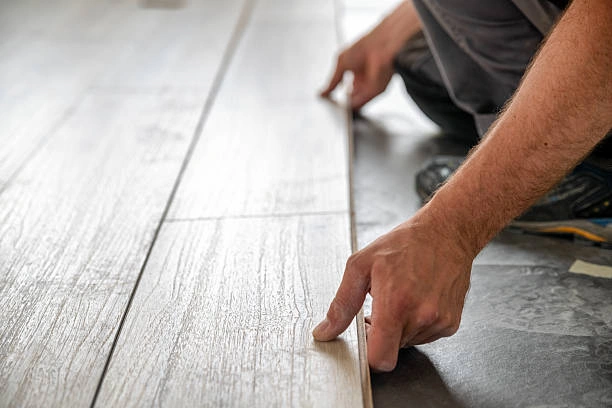
A Loudoun County flooring contractor stated it plainly: “Skipping acclimation is the primary reason for callbacks on hardwood jobs. The floor looks fine for a month, then come February the heat kicks on hard and big gaps appear. Three days’ wait can prevent an expensive disaster.” Local flooring companies such as FLOORSbay Inc that work exclusively in Northern Virginia’s climate conditions build acclimation time into every project’s schedule as a must.
Installation, Sanding, and Finishing
Once acclimation and subfloor prep are complete, installation begins. Nail-down installation uses a flooring nailer to fasten solid planks directly to the wood subfloor. Glue-down installation applies adhesive to the subfloor surface — standard for engineered hardwood over concrete. Float installation places boards over an underlayment pad without direct fastening — suitable for certain engineered products in lower-traffic areas.
For site-finished floors, sanding happens after installation. Three passes with progressively finer grit paper bring the floor to a smooth, uniform surface. Stain goes on next if a color change is desired, followed by two to three coats of polyurethane, oil-modified urethane, or hardwax oil finish depending on the product specified. Each coat requires drying time between applications.
Prefinished installations skip the sanding and finishing phases entirely. The floor is ready for light traffic the day installation completes.
How to Pick the Right Wood Flooring Contractor in Leesburg, VA
The choice of flooring expert for Best Hardwood flooring services in Leesburg, VA can be much more than square-foot prices. A contractor who has no clue about the humidity cycles, subfloor specifications or performance wants a floor that looks good in October but has real issues by February.
These are the specific things to verify before signing any contract:
Virginia contractor license. Confirm the contractor holds a current Class A or Class B contractor license through the Virginia Department of Professional and Occupational Regulation (DPOR). Flooring installation in Virginia requires proper licensure for projects above a defined contract threshold.
Documented hardwood flooring experience. Ask for completed project photos and references from Loudoun County or Northern Virginia homeowners specifically. Wood flooring in a dry Arizona climate performs very differently than in Leesburg’s freeze-thaw seasonal cycle.
Moisture testing protocol. Ask directly: do they test subfloor moisture before installation? Any contractor who cannot describe their moisture testing process has likely skipped it on past jobs.
Written acclimation policy. A professional contractor builds acclimation time into the project schedule and communicates it clearly. If a contractor offers to start installation the same day materials arrive, treat that as a warning sign.
NWFA membership or certification. The National Wood Flooring Association offers training and certification programs. Contractors with NWFA certification have demonstrated technical knowledge of installation, sanding, and finishing standards.
Flooring Contractor Comparison
| Evaluation Factor | Hardwood Specialist | General Flooring Installer | Big Box Store Install |
| Species knowledge | Deep, applied | Variable | Limited |
| Moisture testing | Standard practice | Inconsistent | Rarely performed |
| Acclimation policy | Documented, scheduled | Often skipped | Typically skipped |
| Virginia DPOR license | Current, verified | Verify carefully | Subcontracted, verify |
| Warranty coverage | Materials + labor | Often labor only | Often materials only |
Conclusion
Choosing the right wood species, preparing the subfloor properly, and hiring a contractor who understands the Northern Virginia climate can help ensure wood flooring in Leesburg, VA, rewards homeowners.Various wood types ranging from solid oak in historic colonial King Street to wide-plank engineered walnut in Lansdowne new build will perform to best standards when installation is done in the right sequence from acclimation to final finish coat. Best Hardwood flooring Services in Leesburg, VA the market, as a general principle, always delivers better long-term results to homeowners who ask the right questions at the beginning before the floor goes down.
FAQ’s
Which wood species stands up to Leesburg VA’s climate best?
Red oak and white oak perform well in Leesburg’s blended-humid environment. When acclimatized, both species can adjust to a seasonal swing in humidity without excessive movement. Hickory is more durable for high traffic. Any species of wide-plank boards will exhibit more seasonal movement than narrower planks, which is something to keep in mind for rooms that undergo a fair bit of humidity variation.
What is the installation cost of hardwood floors in Leesburg, VA?
The price depend on species, grade, board width, room complexity and subfloor. Engineered hardwood commonly costs less than site-finished solid hardwood for the same square footage. The final number is affected by stair installation, diagonal layout as well as subfloor repair. Before making a decision, obtain a minimum of three itemized quotes from licensed Virginia flooring contractors.
Do you need a building permit to install hardwood flooring in Leesburg VA?
Many standard floor replacement jobs in Loudoun County don’t require a building permit. Projects that include structural repairs to the subfloor, alterations in the floor system, or works related to a larger renovation may need a permit from the Loudoun County Department of Building and Development. A licensed contractor can verify permit requirements that pertain to your project scope.
How long does hardwood floor installation take in Leesburg?
A standard job that covers 800 to 1200 square feet usually takes two to four days for installation and then an additional three to five days for the site-finishing coats and cure. Because the sanding and finishing is performed off-site, prefinished hardwood installation generally takes less time; often just one to two days. Installation doesn’t begin until three to seven days after acclimation.